


Clouds dance across the sky, a mesmerizing display of nature’s beauty. So, why do the clouds move? The answer lies in the unseen forces at play in the atmosphere, shaping their graceful movements. From gentle breezes to powerful jet streams, these winds guide the clouds on their ever-changing journey. Let’s delve into the fascinating science behind this timeless phenomenon, revealing the intricate reasons why the clouds move with such poetic fluidity. Join us as we uncover the secrets of the shifting skies above.

Why Do the Clouds Move?
Introduction
Have you ever looked up at the sky and watched the fluffy white clouds as they drift across the vast blue canvas above us? It’s a mesmerizing sight, isn’t it? But have you ever wondered why these clouds move? In this blog post, we are going to dive into the fascinating world of clouds and uncover the reasons behind their constant motion.
Understanding Cloud Formation
Before we get into why the clouds move, let’s first understand how clouds are formed. Clouds are made up of tiny water droplets or ice crystals that have condensed from water vapor in the atmosphere. When warm air rises and meets cooler air, the water vapor in the warm air condenses into tiny droplets, forming clouds.
Types of Clouds
There are different types of clouds, each with its unique characteristics. Cumulus clouds are the puffy, cotton-like clouds that we often see on a sunny day. Stratus clouds are gray and cover the sky like a blanket. Cirrus clouds are wispy and high up in the atmosphere. The type of cloud formed depends on various factors such as temperature, humidity, and air pressure.
Wind and Air Currents
One of the primary reasons why clouds move is because of wind and air currents. As air moves around the Earth, it creates different pressure systems that influence the movement of clouds. When warm air rises and cool air sinks, it creates wind patterns that can push clouds across the sky.
Convection and Updrafts
Convection plays a crucial role in cloud movement. When the sun heats the Earth’s surface, warm air rises, and cooler air sinks, creating convection currents. These rising air currents, known as updrafts, carry water vapor up into the atmosphere, where it condenses to form clouds. The movement of these updrafts can cause clouds to drift or change shape.
Jet Streams
Jet streams are high-speed winds that flow high up in the atmosphere. These powerful winds can influence the movement of clouds over vast distances. Jet streams can either carry clouds along with them or cause them to disperse and change shape as they encounter different wind patterns.
Effects of Weather Systems
Weather systems such as cold fronts, warm fronts, and low-pressure systems also play a significant role in cloud movement. When different air masses collide, it can create turbulence in the atmosphere, causing clouds to move rapidly or even form storm clouds.
Cold Fronts
A cold front occurs when a cold air mass advances and replaces a warm air mass. This sudden change in temperature can create strong winds and lead to the rapid movement of clouds. Dark, towering cumulonimbus clouds often form along cold fronts, signaling the possibility of thunderstorms.
Warm Fronts
On the other hand, a warm front happens when a warm air mass advances over a cold air mass. Warm fronts usually bring gentle, steady rain and are characterized by thick, layered stratus clouds that move slowly across the sky.
Local Factors
In addition to larger weather systems, local factors such as topography and bodies of water can also influence cloud movement. Mountains can cause air to rise and create clouds on one side while causing dry, clear skies on the other. Bodies of water like oceans and lakes can add moisture to the air, leading to the formation of clouds that move inland with the wind.
Sea Breezes
Sea breezes are another local factor that can affect cloud movement. During the day, as the land heats up faster than the water, warm air over the land rises, creating a low-pressure area. Cooler air from the ocean rushes in to fill the gap, creating a sea breeze that can push clouds inland.
So, the next time you look up at the sky and watch the clouds dance across the horizon, remember that there are multiple factors at play that influence their movement. From wind patterns and air currents to weather systems and local conditions, the motion of clouds is a beautiful symphony orchestrated by nature.
Next time you find yourself gazing up at the sky, take a moment to appreciate the intricate dance of the clouds and the forces of nature that make it all possible. Who knew that something as simple as clouds moving could tell us so much about the world around us?
Ask Ellen: How do clouds move?
Frequently Asked Questions
How do clouds move across the sky?
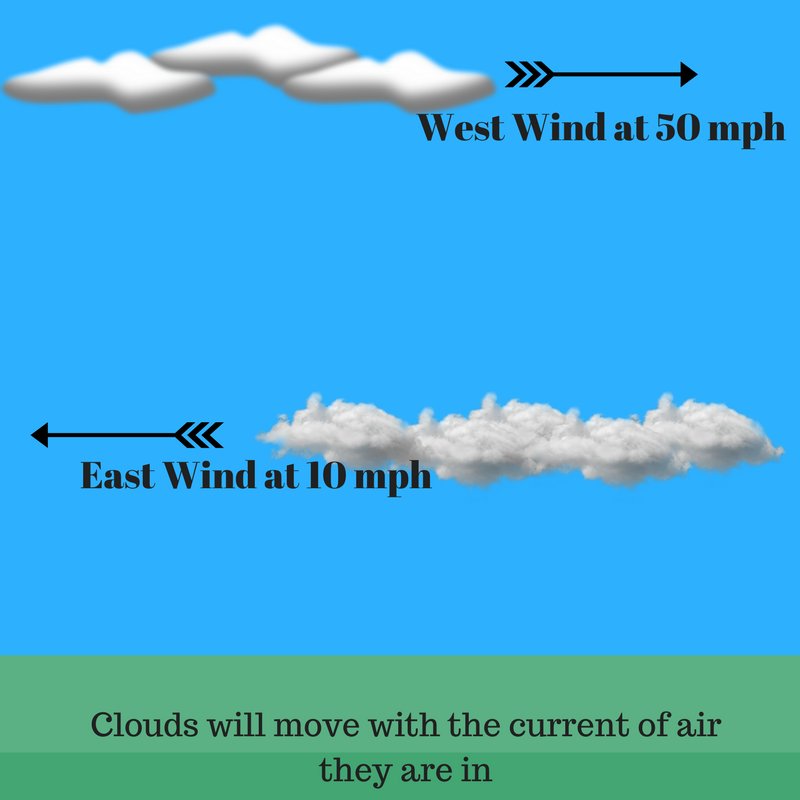
Clouds move across the sky due to the influence of wind. The wind blows at different speeds and directions at various altitudes, carrying the clouds along with it. This movement is known as cloud advection, and it plays a crucial role in shaping the patterns and formations of clouds in the atmosphere.
Why do clouds sometimes appear to move faster or slower?
The speed at which clouds move can vary based on factors such as the altitude, wind speed, and atmospheric conditions. For instance, low-level clouds may appear to move faster due to stronger winds closer to the Earth’s surface, while high-level clouds might seem slower as they are influenced by winds at higher altitudes.
What causes clouds to change direction in their movement?
Changes in wind direction at different altitudes can cause clouds to shift their movement patterns. These variations in wind direction, known as wind shear, can lead to clouds moving in different directions or even changing their shapes as they are pushed and pulled by the forces acting upon them.
Do different types of clouds move differently?
Yes, different types of clouds can move at varying speeds and directions depending on their altitude and composition. For example, cumulus clouds, which are typically low-level clouds, may move faster than high-level cirrus clouds due to the differences in wind patterns at those altitudes.
How does the movement of clouds impact weather patterns?
The movement of clouds is closely linked to weather patterns, as it influences factors such as precipitation, temperature changes, and atmospheric stability. By observing the speed and direction of cloud movement, meteorologists can gain insights into upcoming weather conditions and make forecasts based on the behavior of clouds in the sky.
Final Thoughts
Clouds move due to the wind’s force. This movement occurs at different speeds and heights in the atmosphere. The varying air pressure and temperature gradients influence cloud motion. Understanding the dynamic interplay of these factors helps us comprehend why do the clouds move.


More Stories
Sports Betting Welcome Offers with Competitive Value and Clear Terms
Are The Expressions 0.5(3X + 5) And 1.5X + 2.5 Equivalent?
Why Should You Eat Before A Tattoo: Essential Tips