





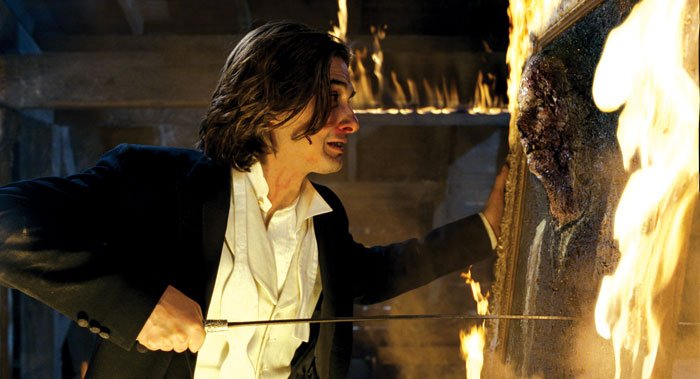
Dorian killed Basil out of fear. The speed of his action stunned even himself. He couldn’t bear the thought of his hidden sins exposed. Dorian had to silence Basil, the only witness to his true self. The moment forever changed him.

Why Did Dorian Kill Basil: A Deep Dive Into the Tragedy
Welcome, young readers! Today, we are going to explore a tragic tale of friendship, influence, and the darkness that can consume even the brightest souls. In Oscar Wilde’s novel The Picture of Dorian Gray, the relationship between Dorian Gray and Basil Hallward takes a dark turn, leading to a shocking outcome. But why did Dorian, the charming and handsome young man, commit such a heinous act as to kill his dear friend Basil? Let’s delve into the complexities of their bond and the events that unfolded.
The Unraveling Friendship
At the heart of this story lies the friendship between Dorian Gray, a wealthy and privileged young man, and Basil Hallward, a talented and devoted painter. Basil’s admiration for Dorian knows no bounds, and he sees in Dorian a muse unlike any other. Through Basil’s paintings, Dorian is immortalized as the embodiment of youthful beauty and innocence.
However, as the story progresses, we witness a gradual shift in the dynamics of their friendship. Dorian becomes increasingly enamored with his own beauty, thanks to a mysterious portrait painted by Basil. This portrait, hidden from the eyes of the world, ages and bears the marks of Dorian’s sins, while Dorian himself remains untouched by time and consequences.
The Influence of Lord Henry
Enter Lord Henry Wotton, a charismatic and hedonistic figure who becomes a pivotal influence in Dorian’s life. Lord Henry’s cynical worldview, coupled with his fascination with the pursuit of pleasure and beauty, gradually poisons Dorian’s mind. Under Lord Henry’s tutelage, Dorian begins to prioritize his own desires above all else, heedless of the moral implications of his actions.
As Dorian falls deeper into a life of debauchery and immorality, Basil’s concerns grow. He confronts Dorian about his alarming behavior, urging him to repent and change his ways. However, Dorian’s transformation into a callous and unfeeling individual is now complete, and he rejects Basil’s pleas with disdain.
The Act of Betrayal
It is in a moment of anger and desperation that Dorian commits the ultimate act of betrayal. Confronted by Basil once again, this time over the shocking contents of the hidden portrait, Dorian’s facade of charm and innocence crumbles. In a fit of rage and panic, Dorian lashes out, leading to a fatal confrontation that ends in Basil’s untimely demise.
The murder of Basil Hallward serves as a turning point in Dorian’s descent into darkness. With blood on his hands and guilt in his heart, Dorian is forced to confront the consequences of his actions. The once-beautiful portrait now reflects the ugliness of his soul, serving as a haunting reminder of the sins he can never escape.
The Tragic End
As Dorian grapples with the weight of his crimes, the novel hurtles towards a tragic and poignant conclusion. Haunted by the specter of his crimes and the deteriorating state of the portrait, Dorian seeks redemption in a desperate bid to rid himself of the curse that plagues him.
However, the past sins of Dorian Gray prove to be insurmountable, leading to a chilling climax that leaves readers pondering the nature of morality, beauty, and the corrupting influence of unchecked desires. The demise of Basil Hallward stands as a stark reminder of the destructive power of vanity and selfishness, serving as a cautionary tale for all who dare to tread the path of temptation.
In conclusion, the question of why Dorian killed Basil is a complex and multi-faceted one. It encapsulates themes of friendship, betrayal, influence, and the consequences of one’s actions. The tragedy of their relationship serves as a powerful reminder of the fragility of human nature and the dangers of succumbing to temptation.
As we close this chapter on Dorian Gray and Basil Hallward, let us reflect on the lessons they impart: that true beauty lies not in physical appearance but in the purity of one’s soul, and that the pursuit of vanity and pleasure can lead to a path of ruin and despair. May their story serve as a cautionary beacon in the darkness, guiding us towards the light of integrity and virtue.
The Murder Of Basil from Dorian Gray
Frequently Asked Questions
What led to Dorian killing Basil?
Dorian decided to kill Basil after Basil confronted him about his immoral lifestyle and the corrupting influence of Lord Henry. Feeling threatened and desperate to keep his reputation intact, Dorian made the impulsive decision to end Basil’s life.
How did Dorian’s relationship with Lord Henry impact his decision to kill Basil?
Dorian’s close association with Lord Henry, who encouraged him to prioritize hedonistic pursuits and disregard moral consequences, played a significant role in his decision to kill Basil. Influenced by Lord Henry’s cynical worldview, Dorian felt justified in taking extreme measures to protect his image and indulge his desires.
Was Dorian’s act of killing Basil premeditated?
Dorian’s decision to kill Basil was not premeditated. It was a spontaneous and emotionally charged response to Basil’s accusations and threats to expose Dorian’s dark secrets. In a moment of fear and irrationality, Dorian resorted to violence as a means to eliminate the threat Basil posed to his carefully constructed facade.
Final Thoughts
Dorian killed Basil out of fear of exposure. Basil’s portrait unveiling threatened to reveal Dorian’s hidden corruption. Dorian’s vanity and desire for immortality led him to commit the ultimate act of betrayal. In the end, it was the darkness within Dorian that drove him to kill his closest friend, answering the question of ‘why did Dorian kill Basil.’




More Stories
Sports Betting Welcome Offers with Competitive Value and Clear Terms
Are The Expressions 0.5(3X + 5) And 1.5X + 2.5 Equivalent?
Why Should You Eat Before A Tattoo: Essential Tips